
THE STREET OF LONELY CARS
drama
Zoran Pešić Sigma
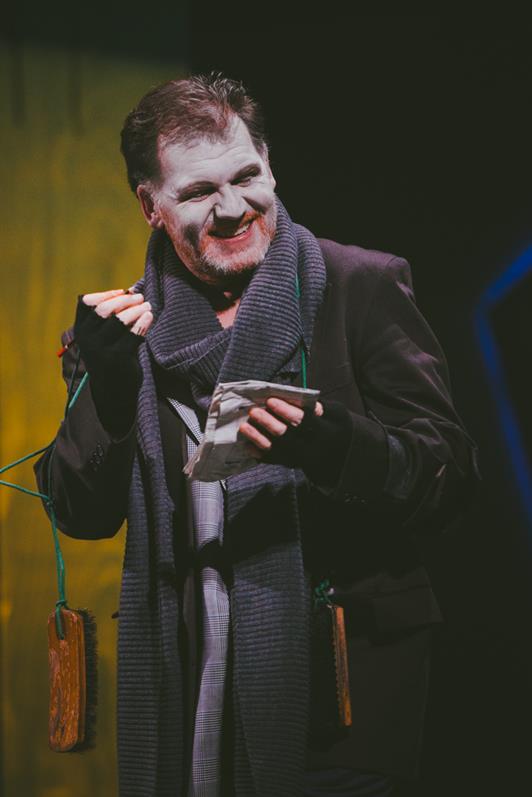
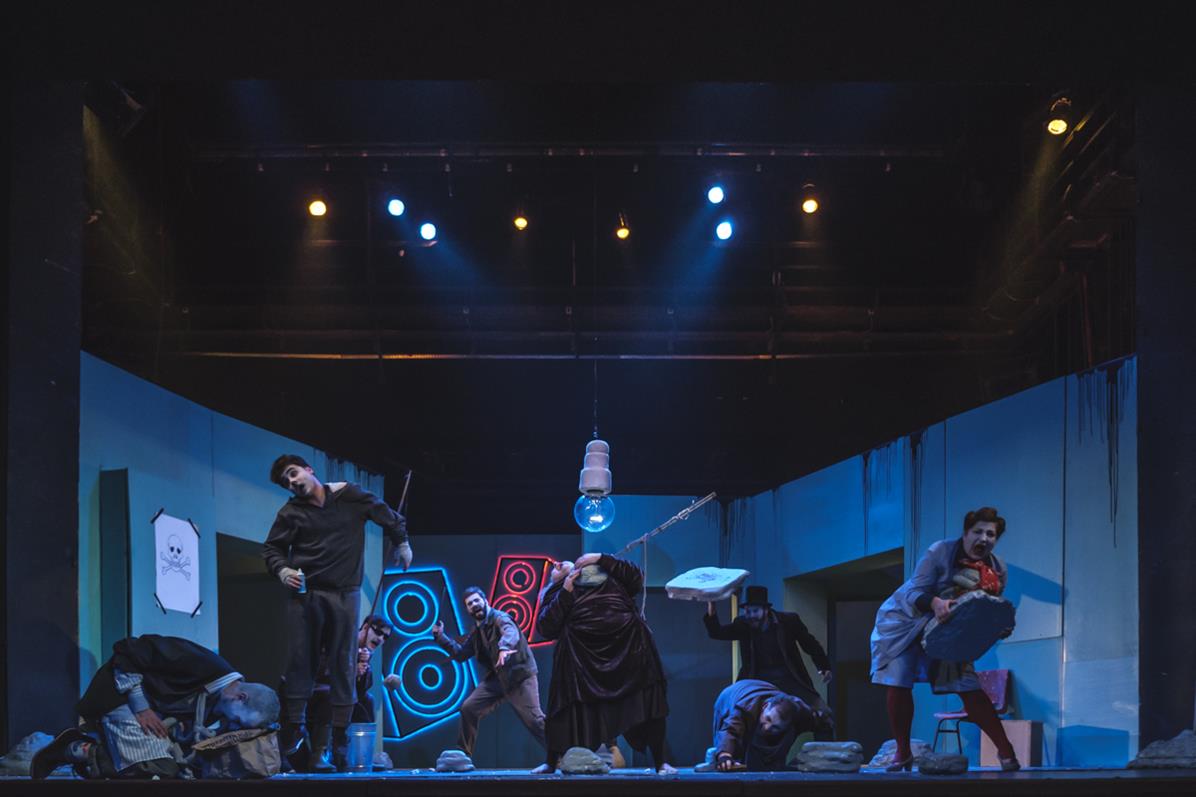
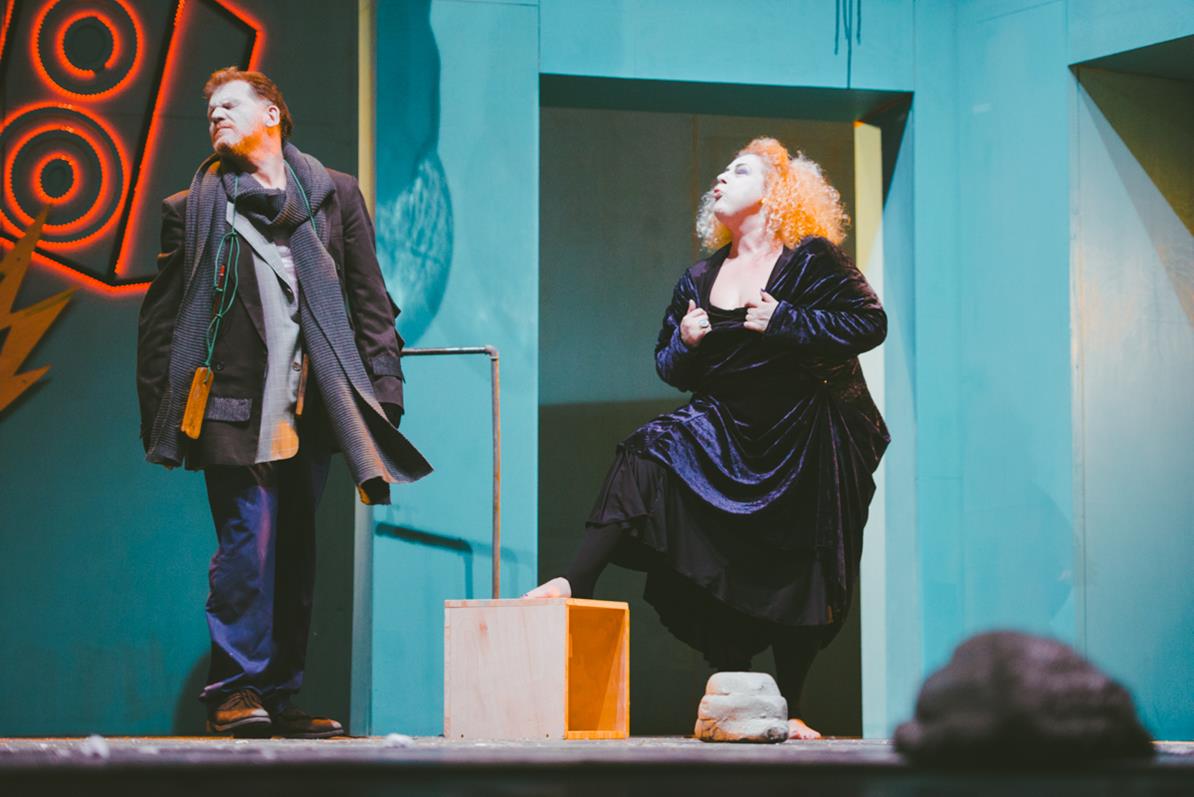
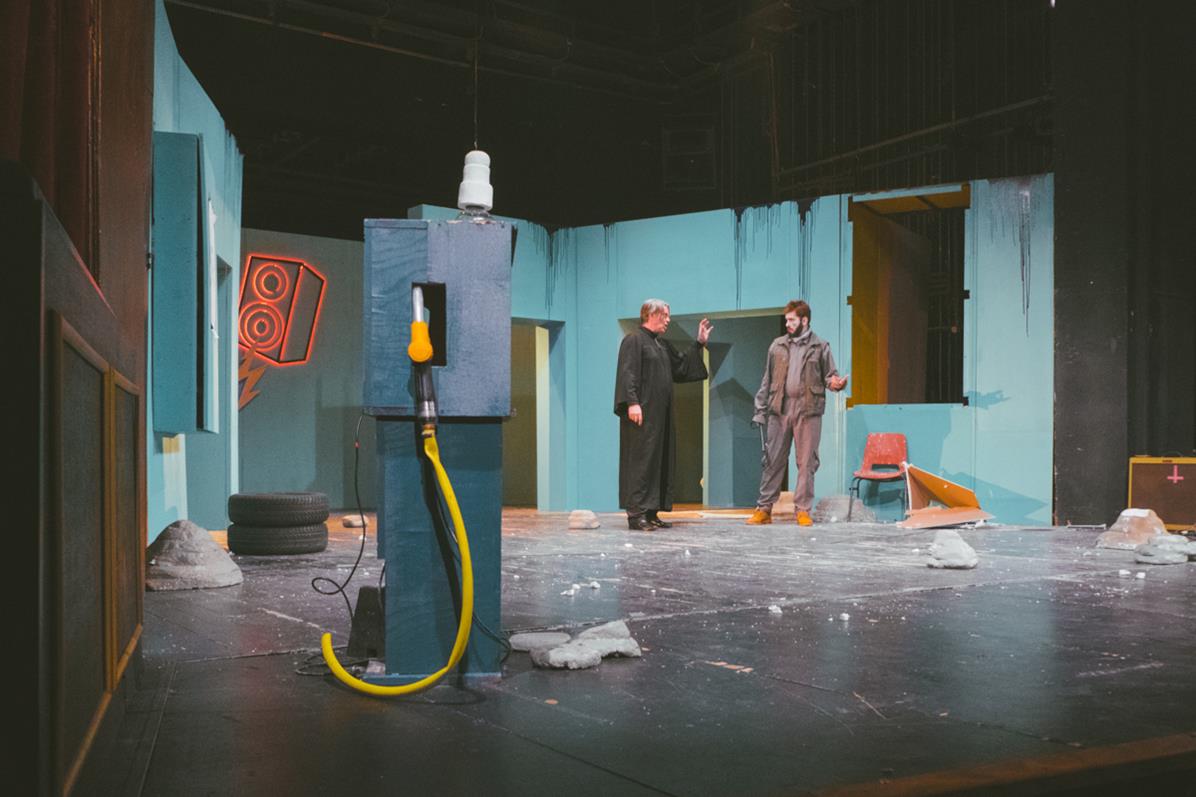
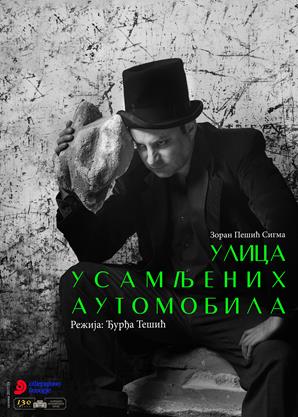
“Street of Lonely Cars” is an absurdist drama about the meaning of human existence in a dehumanized society where fear is the primary means of control and the sole driving force.
Isolated and withdrawn into themselves, resigned to their powerlessness, its inhabitants have long since lost all hope and have essentially ceased to live. Yet, an unexpected visit and a hole opened in the wall set off a chain of events…
ABOUT THE PLAYWRIGHT
Zoran Pešić Sigma (Bela Crkva, 1960) is a writer and editor of Gradina, a literary, art and culture magazine. He is a member of the Serbian Literary Society. He has published eight books of poetry, four books of prose, and two plays. Three of his books have been translated into Greek, Bulgarian and Macedonian. His poetry has been translated into Bulgarian, Romanian, Hungarian, Macedonian, Polish, Spanish and Greek. He has received numerous awards and accolades.
For his play Street of Lonely Cars, he received the Sterija Award for Best Original Serbian Drama (2017).
The novel Street of Lonely Cars was published by the “Stevan Sremac” National Library in Niš.
THE PLAYWRIGHT’S NOTE
It is a story about a closed world. Its boundaries are set, and there seems to be no choice: decline, anxiety, poverty, repetition, boredom, loneliness… A stranger suddenly enters this world and attempts to “restore order” through bureaucratic measures and seize power. The balance is disrupted, and the citizens awaken from their stagnation, fighting to preserve what they thought they possessed: peace and eternity.
This is a mystical-urban story about fear, misunderstanding, emptiness, alienation and meaninglessness. “Electronic silence” hums in our ears, while the roar of black limousines can be heard. Love is always somewhere else.
In other words, it is a story about us.
Zoran Pešić Sigma
DIRECTOR’S BIOGRAPHY
Đurđa Tešić was born in Belgrade in 1977. She graduated in Theatre and Radio Directing from the Faculty of Dramatic Arts in Belgrade in 2002, in the class of professors Nikola Jevtić and Alisa Stojanović.
She has directed the following productions:
“Crta”, Damir Vijuk (BITEF Theatre, 2000)
“Casanova”, David Greig (Serbian National Theatre, Novi Sad, 2002)
“Black Milk”, Vasiliy Sigarev (National Theatre in Belgrade, 2003)
“Everyman/Svako”, Goran Stefanovski (Atelje 212, 2004)
“Blasted”, Sarah Kane (Belgrade Drama Theatre, 2005)
“Momo”, Michael Ende (Duško Radović Little Theatre, 2005)
“The House of Bernarda Alba”, F. G. Lorca (National Theatre of Republika Srpska, 2005)
“Waiting for Godot”, S. Beckett (Atelje 212, 2006)
“Miss Julie”, A. Strindberg (National Theatre of Republika Srpska, 2007)
“Three Sisters”, A. P. Chekhov (National Theatre of Republika Srpska, 2008)
“Milk”, V. Kacikonouris (Belgrade Drama Theatre, 2008)
“Pool (No Water)”, M. Ravenhill (National Theatre in Belgrade, 2009)
“Lord of the Flies”, Tatjana Ilić, based on the novel by W. Golding (Boško Buha Theatre, 2009)
“Marriage and Marriage”, J. S. Popović (National Theatre of Republika Srpska, 2010)
“Novecento – Boka Hotel”, S. Koprivica (Tivat Cultural Centre, 2010)
“Government Officials”, R. Harwood (National Theatre in Belgrade, 2010)
“All About My Mother”, S. Adamson (Belgrade Drama Theatre, 2011)
“Strange Loves”, Maja Pelević (Duško Radović Little Theatre, 2011)
“The Secret of Greta Garbo”, Miro Gavran (Madlenianum Theatre and Opera, 2012)
“Ogvodjena”, G. Balančević (National Theatre in Belgrade, 2013)
“A Lullaby for Vuk Nobody”, Ksenija Popović / B. Mijović (National Theatre in Belgrade / Budva City Theatre, 2013)
“Glorious Florence”, P. Quilter (Atelje 212, 2014)
“Marital Requiem”, M. Morillo (City Theatre Jazavac, 2015)
“A Midsummer Night’s Dream”, W. Shakespeare (Boško Buha Theatre, 2015)
“The Starry Knight”, M. Aracki (Boško Buha Theatre, 2016)
“The Misanthrope”, J. B. P. Molière (National Theatre Subotica, 2017)
“My Grandpa Is an Auto”, D. Janković (Belgrade Drama Theatre, 2017)
DIRECTOR’S NOTE
I accepted the opportunity to work on the production Street of Lonely Cars as a challenge to bring to the stage the absurd and grotesque feeling of our reality, of our sunken society and of people who have long since lost any signpost for life. Black limousines inspire fear; it is systematically maintained and spreads to every citizen. Fear occupies a place of honor in the political life of our community. There are fewer and fewer citizens every day, but fear is growing ever greater. At one point, a character in the play asks a question that echoes through increasingly empty streets: What is a person to do?
Đurđa Tešić
When is this performance playing?
You can find all upcoming dates on the Repertoire page.
BASIC INFORMATION
Genre
Drama
Age
14+
Premiere
March 11, 2018
Stage
Main Stage
CREATIVE TEAM
Director
Đurđa Tešić
Playwright
Zoran Pešić Sigma
Set Design
Zorana Petrov
Costume Design
Maria Marković Milojev
Music
Vladimir Pejković
Choreographer
Igor Koruga
Language Consultant
Nataša Ilić
Coordinator
Ana Veljković
CHARACTERS
Villain
Danilo Petrović
Man
Marko Pavlović
Minister
Dragiša Veljković
Shoeshiner
Bojan Veljović, guest artist
Blue-Haired Witch
Jasminka Hodžić
Cashier
Dragana Jovanović
Journalist
Miloš Cvetković
Guard
Uroš Milojević, guest artist
Fisherman
Nikola Cekić, guest artist
Stray Dog
Stefan Mladenović
Musician
Uroš Kostić, guest artist
TECHNICAL CREW
Head of Technical Department
Ljubiša Živković
Stage Manager
Dobриla Marjanović
Prompter
Ozren Mitić
Sound Technician
Vladislav Đorđević
Lighting Technician
Dejan Mitić
Lighting
Dejan Cvetković, Dragoslav Dobrosavljević, Nemanja Pavlović
Stage Technician
Slaviša Filipović
Set Decorators
Radomir Pešić
Props
Marko Đorđević, Dragan Nikolić
Wardrobe
Dušica Mladenović, Marko Dinić
Makeup and Wigs
Ljiljana Rašić, Marija Pešić, Ivana Lazarević
Tailoring
Marina Stevanović, Vladimir Pekić
Workshop
Bogoljub Đorđević, Goran Stanković, Dragan Perić, Branislav Nikolić
Procurement
Zoran Denčić
Driver
Nebojša Šarčević