
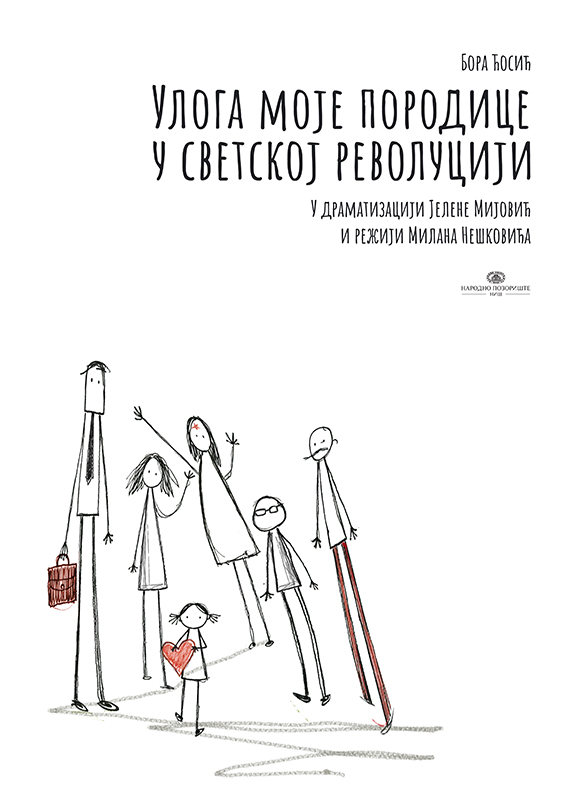
THE ROLE OF MY FAMILY IN THE WORLD REVOLUTION
drama
Bora Ćosić
ABOUT THE AUTHOR
Bora Ćosić (Zagreb, 1932) is one of the most significant Serbian and Yugoslav writers of the second half of the 20th and the beginning of the 21st century. He was born in Zagreb and grew up and was educated in Belgrade, where he studied philosophy at the Faculty of Philosophy.
He began his literary career in the 1950s, initially as an editor and essayist, and later as a novelist, playwright and translator. A particularly important place in his body of work is occupied by the novel The Role of My Family in the World Revolution (1969), a witty and satirical family chronicle that became one of the cult works of Yugoslav literature and for which he received the prestigious NIN Award. The novel was also adapted into a film of the same title.
Ćosić’s work is characterized by irony, a critical attitude toward ideology and society, as well as an examination of identity and history. Among his notable works are the novels The Tutors (1978) and Journey to Alaska (2008), as well as numerous books of essays and diary entries. He has written around 50 books, published in Serbia, Croatia and Germany.
BIOGRAPHY OF THE DIRECTOR
Milan Nešković (Valjevo, 1985) graduated in Theatre Directing from the Faculty of Dramatic Arts in Belgrade, in the class of Professor Nikola Jevtić and Professor Alisa Stojanović. He has received numerous awards for his work in theatre and beyond, having been active for more than a decade across various fields of culture throughout the region.
To date, he has successfully directed four productions at the National Theatre in Niš: Nineteen Fifteen (2013), Drivers (2014), A Dream of the Homeland (2023), and The Beggar’s Opera (2025). The production A Dream of the Homeland was awarded Best Production Overall at the 2023 “Joakim Vujić” Festival, receiving recognition from both the jury and the audience. Milan Nešković was awarded the prize for Best Direction.
ABOUT THE PRODUCTION
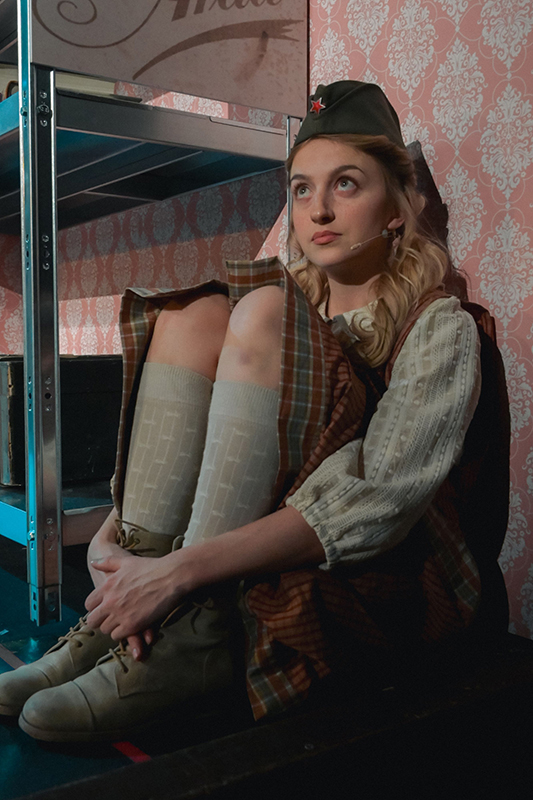
Fifty-six years have passed since the novel The Role of My Family in the World Revolution received the NIN Award in 1969. Firmly rooted in its time and place, and subversive in relation to the social system in which it was created, one might have expected it to remain confined to that era. As a testimony, as a literary document of a historical period, and as a valuable and formally exceptional work of literary history. The novel could also be of interest to sociological and socio-political studies, as evidence that, if censorship in socialist Yugoslavia was indeed as pervasive as is often claimed today, then neither this novel nor the Black Wave in art would have been possible in such a country.
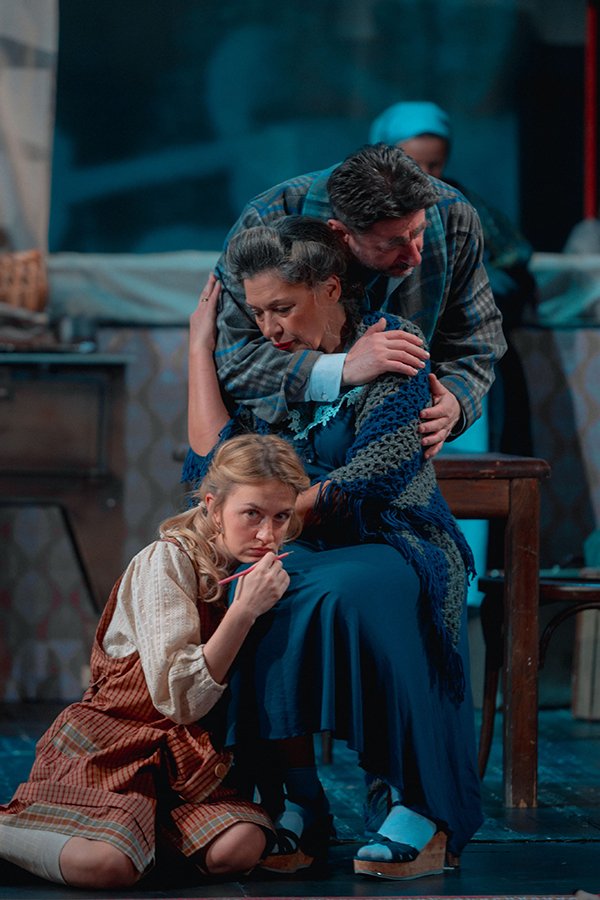
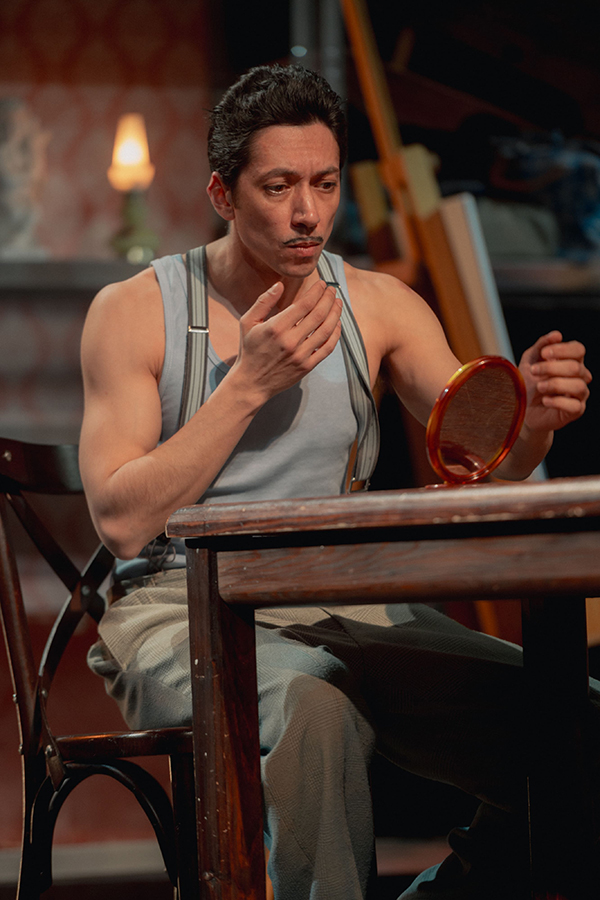
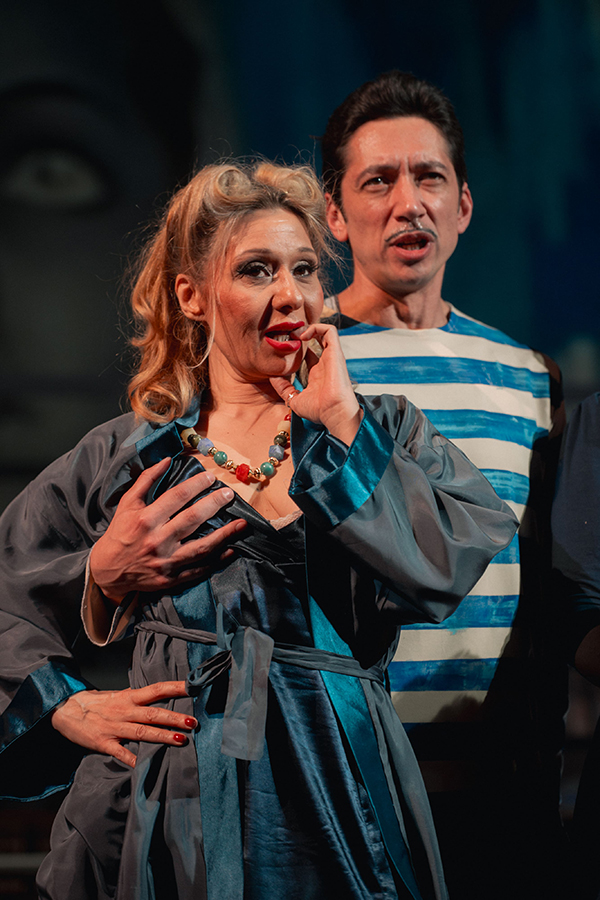
What is unexpected at first glance in the fate of this novel is that, ever since its creation, it has continuously and repeatedly lived a parallel theatrical life. Theatre is a living art, and the life that overflows from Ćosić’s Family seems to leap onto the stage itself, only to happen once again, here and now. Because The Role of My Family in the World Revolution is not a story about the collapse of a family as a result of socio-political upheavals, but, on the contrary, about the survival of a family.
Good evening, and welcome to a family in permanent revolution. In this family, people sing, play music, paint and read; every craft is transformed into art, every meal into a work of art, and every spoken sentence into a verse. The freedom to express one’s opinion, even the most foolish one, is the greatest wealth! Along with bread, freedom is the most important thing in the world, and the free spirit flies unhindered through the kitchen, skips across homework assignments, dozes inside a book hidden behind the stove, peeks out from beneath the quilt and sticks its tongue out at the neighbours.
This family owes its survival to the free spirit of all its members, as well as to the fact that it is neither rigidly patriarchal nor founded upon those most frequently invoked “traditional family values.” It is founded on love, art and freedom, on the immaterial, on a refusal to respect authority simply for authority’s sake, on each member’s inner sense of justice and integrity, and on a critical spirit capable of distinguishing good from evil. When such principles are the spiritus movens, the life they live is always a new river they step into. Change, that essence of life which we so often struggle to accept, is their natural state. Revolution—the free spirit is always revolutionary—is every day of family life, regardless of the revolution taking place outside.
And perhaps the most important thing that allows this extraordinary family, this last place where every life has value, to survive is laughter. Laughter is a shield against fear and darkness; laughter is the song of the free spirit; laughter is a defence against banality. In order to survive, we must laugh.
The creative team of the production
When is this performance playing?
You can find all upcoming dates on the Repertoire page.
BASIC INFORMATION
Genre
Drama
Running time
90 minutes
Age recommendation
14+
Premiere
April 17, 2026
Stage
Main Stage
CREATIVE TEAM
Text
Bora Ćosić
Direction
Milan Nešković
Dramatization
Jelena Mijović
Set Design
Gorčin Stojanović
Music
Božidar Obradović
Costume Design
Marina Vukasović Medenica UKSSS
Choreography
Andreja Kulešević
Stage Speech
Nataša Ilić
Photography
Nikola Milosavljević
Production Coordinator
Miloš Pavlović
CAST
Child
Milica Filić, guest artist
Mom
Sanja Krstović
Dad
Aleksandar Marinković
Grandfather
Aleksandar Mihailović
Uncle
Miloš Cvetković
Aunt
Jasminka Hodžić
Neighbour Daroslava
Maja Vukojević Cvetković
Olgica, Mrs. Sikira
Bratislava Milić
Jovo Sikira
Andrija Mitić
Voja Bloša
Stefan Mladenović
Vaculić
Danilo Petrović
German, Russian, Porter
Danilo Milenković, guest artist
Painter
Aleksandar Stevanović, guest artist
TECHNICAL TEAM
Stage Manager
Dobrila Marjanović
Sound Engineer
Aleksandar Stevanović
Lighting Design
Vojkan Dobrosavljević
Lighting Technician
Marko Đorđević
Video
Slobodan Ilić
Prompter
Vanja Šukleta
Technical Director
Dejan Mitić
Stage Manager
Radomir Pešić
Set Technicians
Srđan Kitanović, Miodrag Đorđević, Mića Lazarević, Nemanja Perić, Marin Rajić
Props Master
Dragan Nikolić
Wardrobe
Anđela Jevtić, Katarina Pavlović
Makeup and Wig Artists
Marija Cvetanović, Ivana Lazarević
Tailoring
Olgica Mitić, Vladimir Pekić
Workshop
Goran Stanković, Dragan Perić, Branislav Nikolić
Procurement
Zoran Denčić, Ivan Todorović
Driver
Nebojša Šarčević