
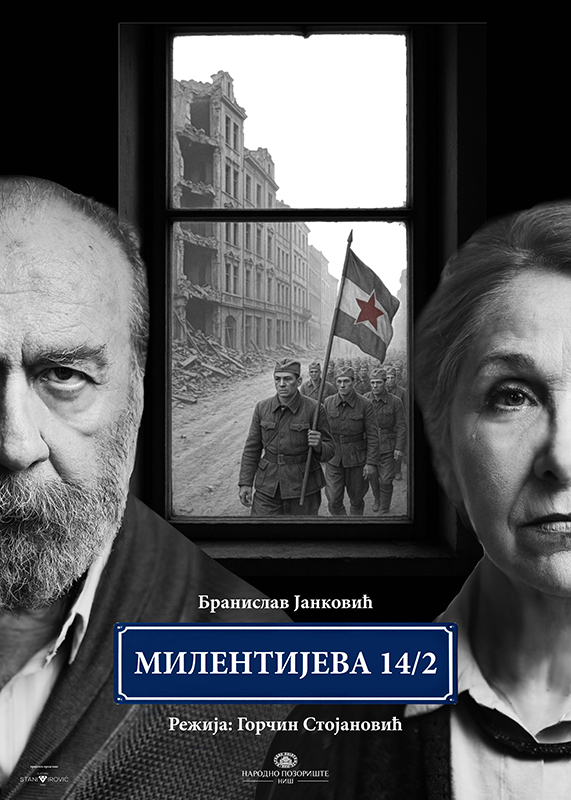
MILENTIJEVA 14/2
drama
Branislav Janković
AUTHOR’S NOTE
Are we nothing more than the shadows of our ancestors?
Do we carry the sin of some great-great-grandfather, the suffering of a great-grandmother, the forbidden love of a grandfather, and a mother’s apprehension, and then try to live this life with all these intertwined emotions, already marked by those that belong to others?
And where do our ancestors end, and we begin?
Milentijeva 14/2 is a fictional story, but one born out of memories that were not particularly happy, memories hidden for decades, sorrows that were never fully told, and even joys (as though someone might steal them from us, so we press our lips together even in moments of happiness). It came into being as the confession of two people worn down by secrets, because secrets are heavy to carry and bring pain both to the person who keeps them and to the one who discovers them.
And then we ask ourselves: are there such things as fictional stories? Or has everything already happened, merely waiting for someone to write it down?
And when does the past end, and the future begin?
And where do we end, and our children begin?
AUTHOR BIOGRAPHY
Branislav Janković, born on February 1, 1969, in Niš, is a prominent Serbian journalist, writer, and screenwriter. He graduated in Journalism from the Faculty of Philosophy at the University of Niš, where he also earned a master’s degree in Literature.
He began his professional career in journalism, working for more than two decades as a correspondent, editor, and presenter at the RTS correspondent office in Niš, as well as at the local television stations NTV and Belami.
As a writer, Janković is known for novels that combine historical motifs, fantasy, and spiritual themes. His bibliography includes nine novels – from his debut O Vukovima i Senkama (About Wolves and Shadows, 2011, Laguna) to his latest work Utvare (Ghosts, 2024, Laguna) – as well as expanded editions, such as Suze Svetog Nikole (The Tears of Saint Nicholas) in the Cyrillic edition. In addition to novels, Janković is the author of the short-story collections Bezmeni (The Nameless, 2014) and Vrane (Crows, 2021), as well as the poetry collection Februarski brodovi (February Ships, 2017). His radio plays, including Dve duše Gvozdena Milića (The Two Souls of Gvozden Milić) and Dva neba (Two Skies), have been broadcast on the Second Programme of Radio Belgrade. He has also written screenplays for films, including Poslednji strelac (The Last Shooter, 2023).
His trilogy about Jevrem Utvić, a defrocked priest and investigator, is particularly notable. Comprising the novels Vetrovи zla (Winds of Evil), Gvozdeni oblaci (Iron Clouds), and Utvare (Ghosts), the trilogy explores themes of sin, redemption, and spirituality within the Serbian cultural context.
For his literary work, Janković has received numerous awards, including the Miroslav Dereta Award for Mačka u koferu (The Cat in the Suitcase, 2019), the international Golden Dragon Award for his contribution to the development of fantasy literature (2022), and film-related awards, including Best Screenplay at the Vrnjačka Banja Film Festival (2024). He is also the recipient of the Radio Belgrade Award for his plays Milentijeva 14/2 and Dva neba.
He is a member of the Serbian Literary Society and the Association of Journalists of Serbia.
DIRECTOR’S BIOGRAPHY
Gorčin Stojanović
Born in October 1966 in Sarajevo, where he completed primary school and the renowned First Gymnasium. He graduated in Theatre and Radio Directing from the Faculty of Dramatic Arts in Belgrade, in the class of Professor Dejan Mijač.
From his first production at the Yugoslav Drama Theatre (Dear Jelena Sergeyevna, 1989) to the present day, he has directed around seventy productions in most of Belgrade’s theatres, as well as in theatres in Sarajevo, Skopje, Podgorica, Budva, Novi Sad, Sombor, Niš, and Kragujevac, based on works by Shakespeare, Molière, Wedekind, Sterija, Nušić, Krleža, Crnjanski, Andrić, and contemporary Serbian and international playwrights.
He has created around one hundred set designs for his own productions and for productions directed by others (Iva Milošević, Boris Liješević, Milan Nešković, Jana Maričić, Milan Misirača, Milan Karanović, Goran Šušljik).
He directed two feature films and one short film (Premeditated Murder, The Hornet, Porajmos), as well as six television series.
He has received numerous awards for his theatre productions, films, and set designs, as well as for his work on radio dramas, at festivals in Valencia, Kyiv, Trieste, Sochi, and Herceg Novi, as well as at Sterijino Pozorje, the Sarajevo MESS Festival, Ohrid Summer, Banja Luka Theatre Fest, the “Joakim Vujić” Festival, the Vojvodina Professional Theatre Meetings, Nušić Days, and numerous other festivals.
He has worked as a columnist for Naša Borba, Vreme, Blic, Blic News, Radar, and other newspapers and weekly publications.
He served as Artistic Director of the Yugoslav Drama Theatre.
DIRECTOR’S NOTE
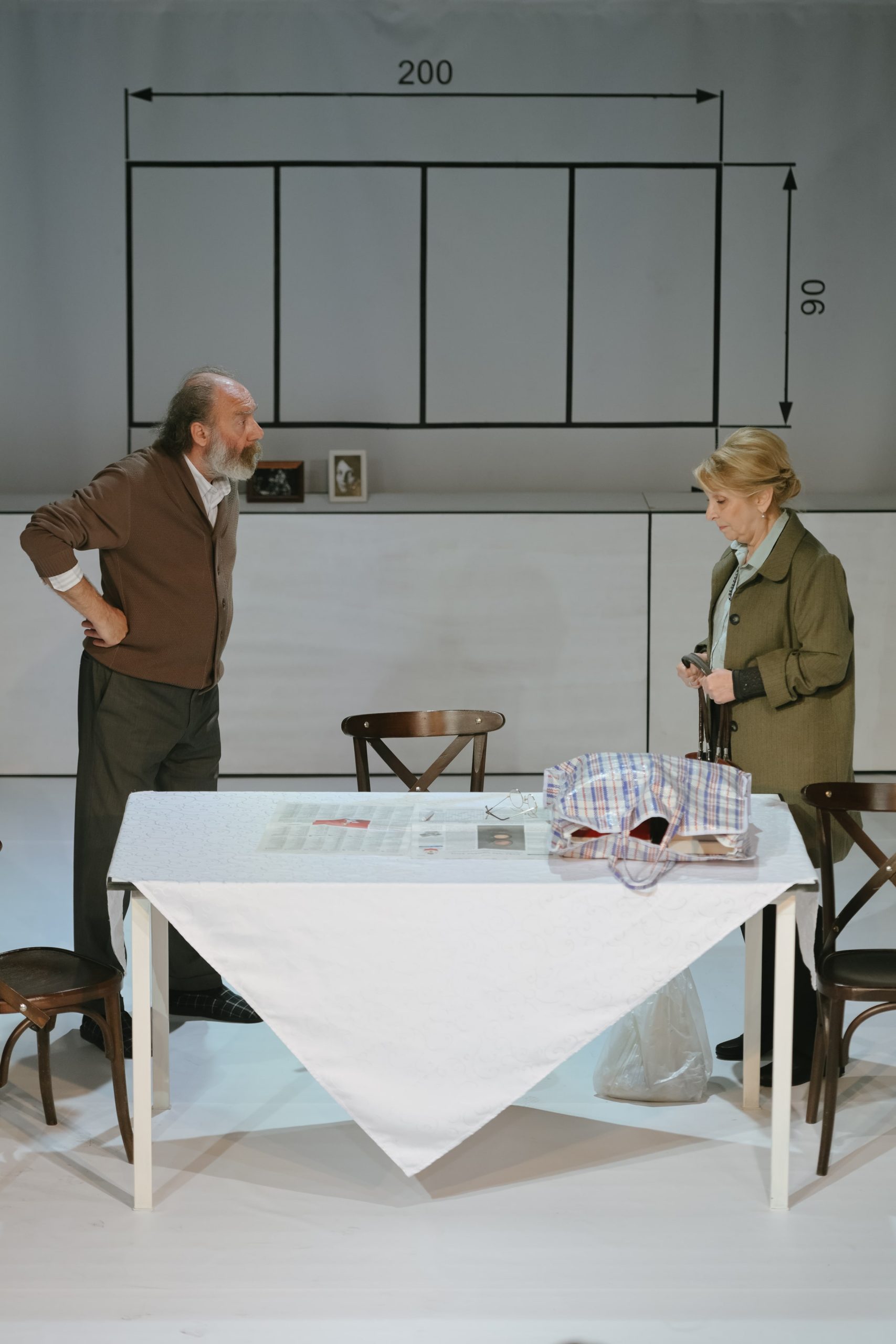
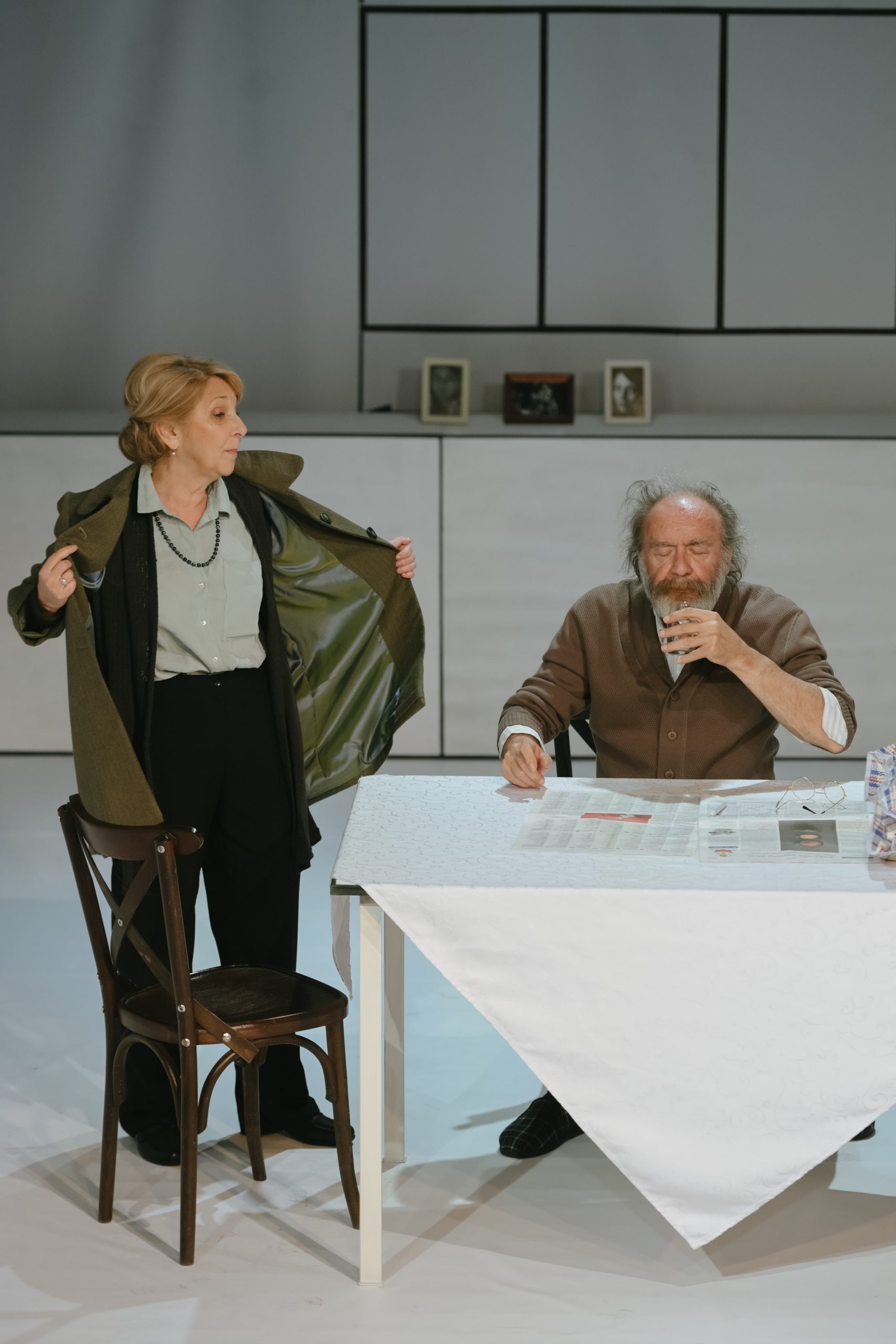
A play is most successful when we cannot easily and unconditionally decide which of the protagonists in the dramatic conflict is right, when the characters are engaged in an emotional and intellectual balancing act, each possessing equal human weight.
This is precisely such a play.
That is why working on it was so exciting for us: we ourselves have no right to say who here is the Winner and who is the Loser.
After all, if we had that answer, there would be no point in grappling with this story. It is beautiful and truthful precisely because of that.
And that, I believe, is one of the theatre’s main tasks – if theatre is supposed to have any tasks at all – to remind us of our imperfections and offer us consolation for them.
Gorčin Stojanović
When is this performance playing?
You can find all upcoming dates on the Repertoire page.
GENERAL INFORMATION
Genre
drama
Running Time
70 minutes
Age Recommendation
14+
Premiere
June 14, 2025
Stage
Main Stage
CREATIVE TEAM
Text
Branislav Janković
Director and Set Designer
Gorčin Stojanović
Costume Designer
Vladimir Pekić
Language Consultant
Nataša Ilić
Photography
Nikola Milosavljević
Organizer
Snežana Jović
CAST
Mrs. Radmila Milodragović
Ivana Nedović
Comrade Svetozar Radović
Nebojša Ljubišić, guest
TECHNICAL TEAM
Stage Manager
Slobodan Ilić
Sound Engineer
Dobrila Marjanović
Lighting Design
Dejan Cvetković
Lighting Technician
David Jovanović
Prompter
Jana Savić
Technical Director
Dejan Mitić
Stage Manager
Radomir Pešić
Set Crew
Srđan Kitanović, Miodrag Đorđević, Mića Lazarević, Nemanja Perić, Pavle Rajić
Props Master
Dragan Nikolić
Wardrobe
Anđela Jevtić, Katarina Pavlović
Make-up and Wig Artists
Ljiljana Rašić, Marija Cvetanović
Tailoring
Vladimir Pekić
Set Construction
Bogoljub Đorđević
Procurement
Zoran Denčić, Ivan Todorović
Driver
Nebojša Šarčević