
DANGEROUS LIAISONS
drama
Christopher Hampton
ABOUT THE AUTHOR
Dangerous Liaisons (Les Liaisons dangereuses, 1782) is a cult epistolary novel and one of the most provocative works of 18th-century European literature. Its author, Pierre Choderlos de Laclos (1741–1803), was a French army officer, writer and thinker of the Enlightenment. Although he wrote several works during his lifetime, Dangerous Liaisons remains his most significant and influential literary achievement. Upon its publication, the novel provoked intense controversy and scandal due to its frank depiction of sexuality, manipulation and the moral decay of the aristocracy on the eve of the French Revolution. Today, Laclos’s work is regarded both as a ruthless critique of the ancien régime and as a psychologically precise study of power, desire and destructive intelligence.
Through a web of letters, the author exposes the hypocrisy of aristocratic society, in which seduction becomes a weapon and emotions a means of manipulation.
The stage version most commonly draws on Christopher Hampton’s adaptation, one of the most widely performed modern adaptations of the novel, which has been presented on major stages around the world, from London and Paris to Broadway. Hampton’s adaptation also served as the basis for the acclaimed 1988 film Dangerous Liaisons.
The story follows the dangerous game of the Marquise de Merteuil and the Vicomte de Valmont, two exceptionally intelligent and morally ruthless seducers who use intrigue, schemes and romantic deception as instruments of power. Their game, initially driven by boredom and vanity, gradually develops into a tragedy in which all the participants become victims of their own actions.
Throughout history, Dangerous Liaisons has inspired numerous theatrical and film adaptations. The work remains highly relevant today as a ruthless study of power, manipulation, erotic desire and the collapse of moral values.
DIRECTOR’S BIOGRAPHY
Born in Belgrade in 1978, he graduated in Theatre Directing from the Faculty of Dramatic Arts in his hometown. For more than fifteen years, he has been professionally active on theatre stages across Serbia, Montenegro, Bosnia and Herzegovina, and Austria. He has worked at the Belgrade Drama Theatre, Bitef Theatre, National Theatre in Belgrade, Atelje 212, Duško Radović Little Theatre, Madlenianum Drama and Opera Theatre, Montenegrin National Theatre, Mostar Youth Theatre, Bosnian National Theatre in Zenica, Nestroyhof-Hamakom Theatre and Hundsturm Theatre in Vienna, as well as at numerous other theatres. For nine years, he taught at the Faculty of Dramatic Arts in Belgrade.
He has directed works by major classical and contemporary playwrights. Among the plays he has staged are Medea-Material by Heiner Müller, Prometheus Bound by Aeschylus, The Death of Iphigenia at Aulis by Euripides, The Learned Ladies by Molière, The Lady from the Sea by Henrik Ibsen, as well as miniatures by Samuel Beckett. His work with contemporary texts includes The Man by Philippe Loele, The Face of the Flame by Marius von Mayenburg, Little Geza by János Háy, In the Solitude of Cotton Fields by Bernard-Marie Koltès, Weasels by Bojana Mijović, Rest in Peace by Jeton Neziraj, Powdered Milk by Dragana Tripković, Buds by Sanja Domazet, based on motifs from the poetry of Vasko Popa, Garbage Dump by Kosta Peshevski, and many others.
His productions have been presented at numerous festivals, including the Joakim Vujić Festival, MESS, Bitef Festival, the Yugoslav Theatre Festival in Užice, the Festival of Bosnian-Herzegovinian Drama, and the Biennial of Montenegrin Theatre. He is a two-time recipient of the Best Director Award at the Joakim Vujić Festival and has also received the Best Director Award at the Festival of Contemporary Bosnian-Herzegovinian Drama. He was additionally awarded Best Director at the Festival of New Theatre Productions in Aleksinac.
He lives primarily in Belgrade.
DIRECTOR’S NOTE
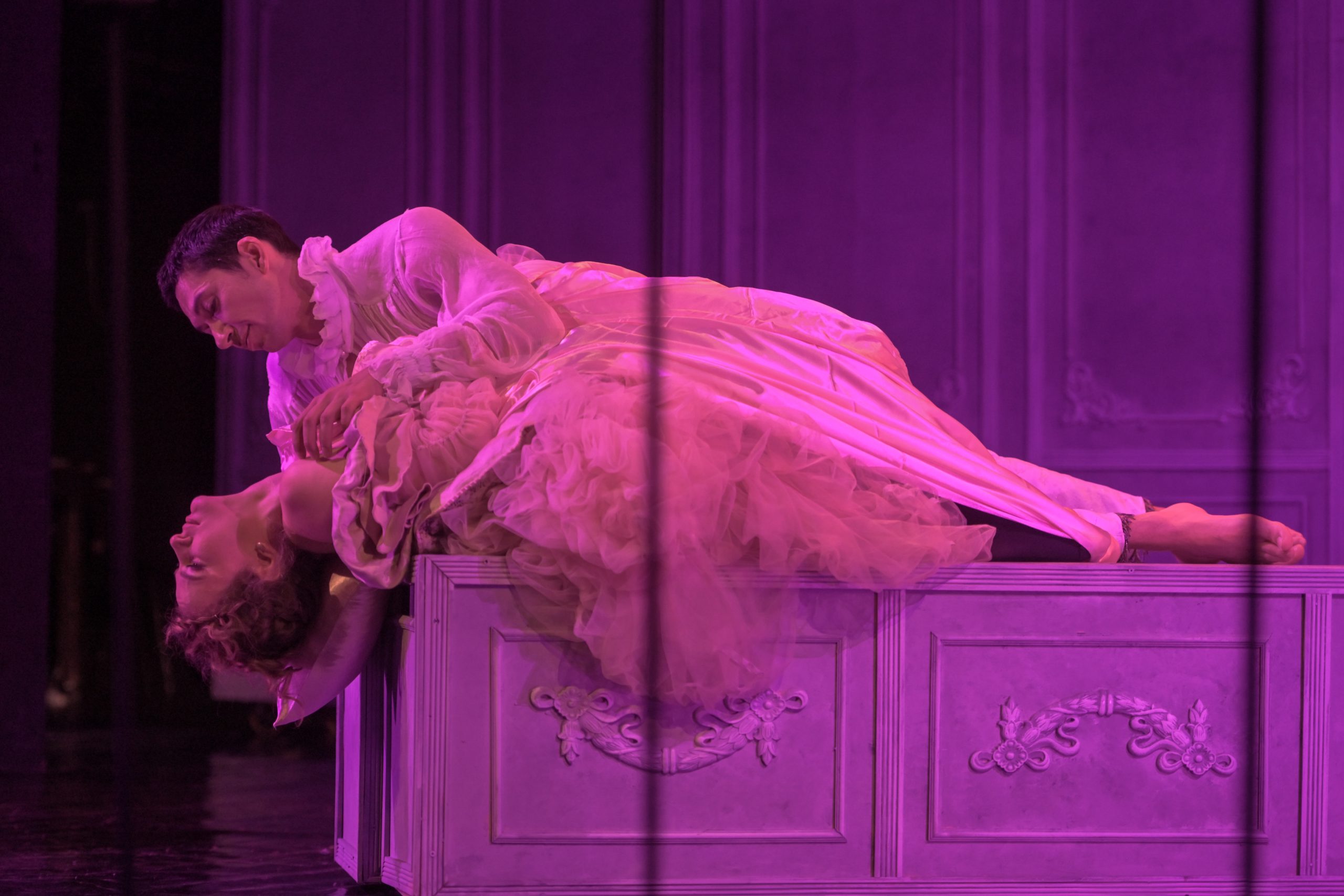
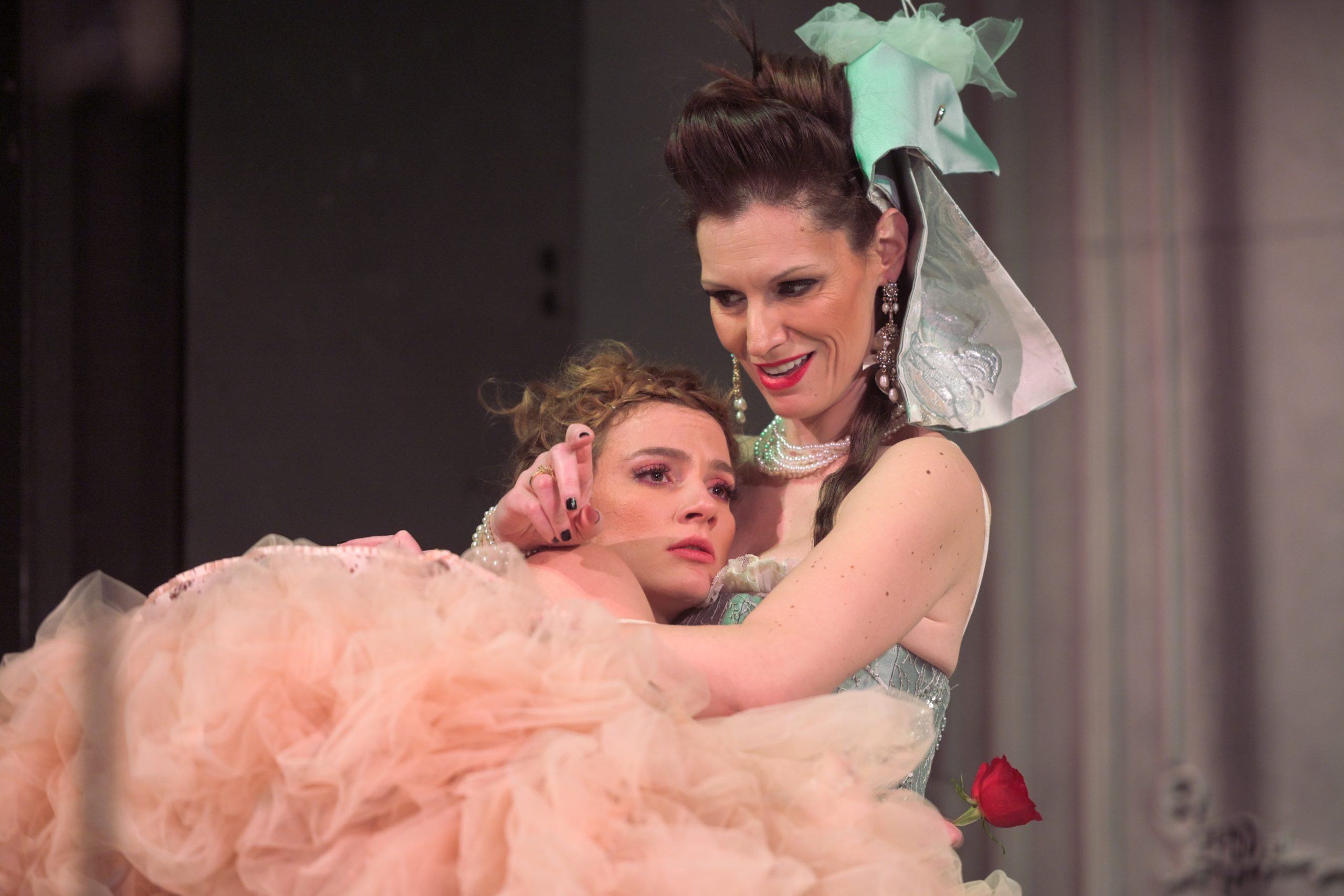
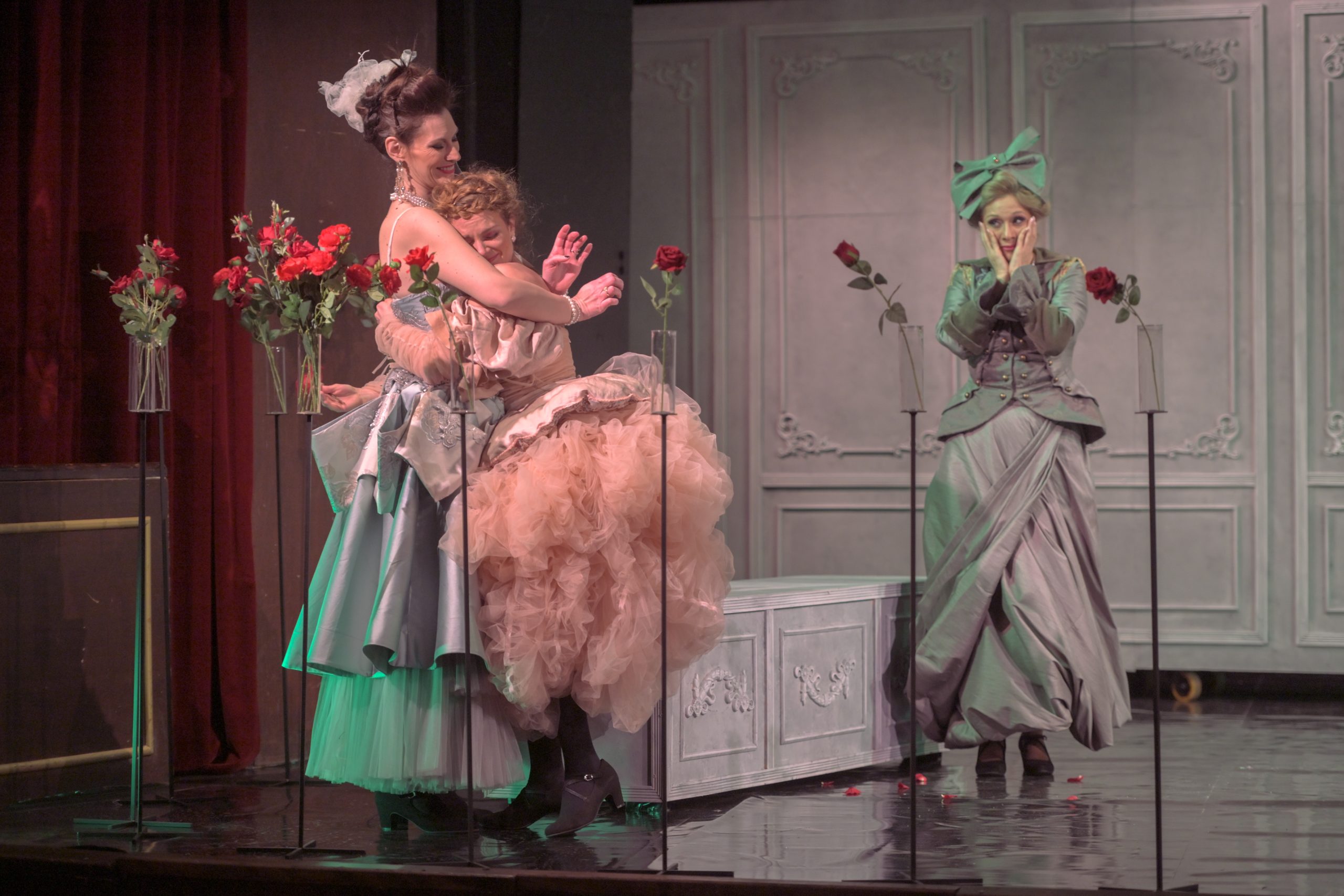
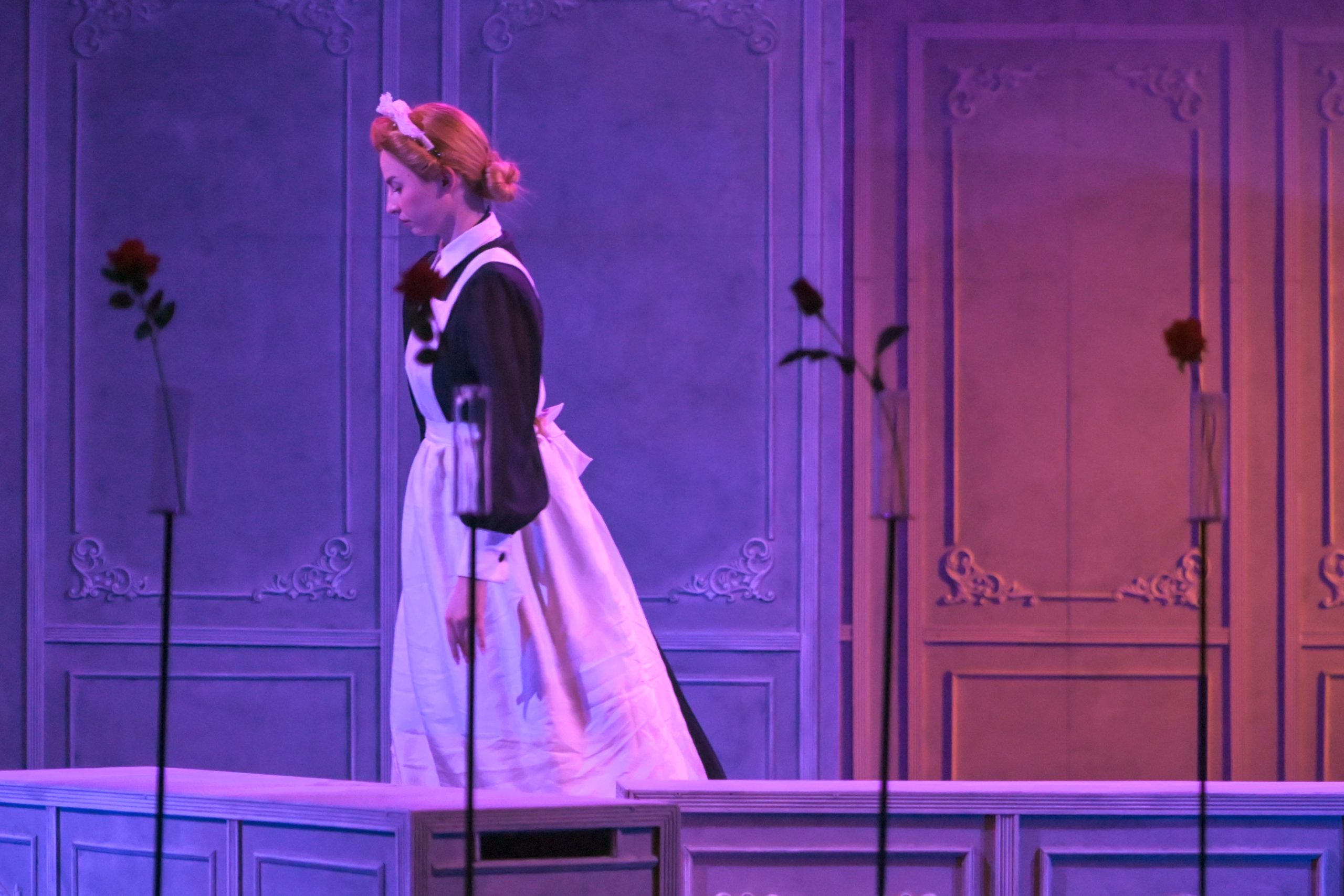
Dangerous Liaisons by Christopher Hampton, based on the novel by Choderlos de Laclos, is one of the greatest works of world literature, if not the greatest, about manipulation, intrigue, and the devastating effect such behavior has on human lives.
The human soul is like a record, into which everything a person has thought, done, and felt is inscribed. The sins committed against others are difficult to erase from that record, and those committed against oneself are even harder. Every time we betray genuine love, every time we place egoism above emotion and empathy, an irreversible part of us is diminished.
Atonement for such spiritual crimes is possible only through profound spiritual effort, but the characters in this play are not spiritual beings. They belong to a privileged social class that spends its immense wealth and leisure on entertainment and endless emotional and sexual games with one another. That is why their collective fate, as a social class, is historically sealed, although the play does not deal with it directly. After the events of this drama come to an end, the French Revolution will erupt and bring the arrogant privileges of these people to a bloody conclusion.
What Dangerous Liaisons teaches us—a deeply moral story—resonates across all eras: manipulating emotions is an unforgivable sin, a crime that cannot be redeemed, and a form of hubris that inevitably leads to ruin.
Before us on stage parade powerful, elegantly dressed, wealthy, and profoundly unhappy people, whose existential driving force is vanity. On January 31, the Niš audience will witness how these characters learn difficult lessons about the deep deviancy of lives filled with lies and intrigue.
Which of them ultimately experience catharsis, even through the inevitability of death that brings repentance, and which remain trapped in the limbo of their narcissism, like in a hellish chamber of opposing mirrors where nothing exists but countless reflections of their own unhappiness and loneliness—that is the subject of the production that will be presented to the Niš audience.
When is this performance playing?
You can find all upcoming dates on the Repertoire page.
BASIC INFORMATION
Genre
drama
Duration
150 minutes
Age
14+
Premiere
January 31, 2026
Stage
Main Stage
CREATIVE TEAM
Text
Christopher Hampton
Director
Stevan Bodroža
Translator and Dramaturg
Marija Stojanović
Set Designer
Milica Bajić Đurov
Costume Designer
Tatjana Radišić УКССС
Assistant Costume Designer
Katarina Pavlović
Stage Movement
Marko Pavloviski
Sword Fighting Choreography
Miloš Cvetković, Danilo Milenković
Language Consultant
Nataša Ilić
Photography
Nikola Milosavljević
Organizer
Snežana Jović
CAST
Marquise de Merteuil
Katarina Mitić Pavlović
Madame de Volanges
Maja Vukojević Cvetković
Cécile de Volanges
Nikolija Mičić, guest
Vicomte de Valmont
Miloš Cvetković
Azolan
Aleksandar Stevanović, guest
Madame de Rosemonde
Ivana Nedović
Présidente de Tourvel
Milica Filić, guest
Émilie
Bratislava Milić
Chevalier Danceny
Danilo Milenković, guest
Julie
Jana Savić
TECHNICAL TEAM
Stage Manager
Dobrila Marjanović
Prompter
Jana Savić
Sound Engineer
Slobodan Ilić
Lighting Design
Vojkan Dobrosavljević
Lighting Technician
Marko Đorđević
Technical Director
Dejan Mitić
Stage Manager
Radomir Pešić
Set Crew
Srđan Kitanović, Miodrag Đorđević, Mića Lazarević, Nemanja Perić, Marin Rajić
Props Master
Dragan Nikolić
Wardrobe
Anđela Jevtić, Katarina Pavlović
Make-up and Wig Artists
Marija Cvetanović, Ivana Lazarević
Tailoring
Vladimir Pekić
Workshop
Goran Stanković, Dragan Perić, Branislav Nikolić
Procurement
Zoran Denčić, Ivan Todorović
Driver
Nebojša Šarčević