
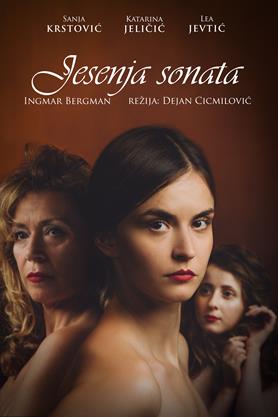
AUTUMN SONATA
drama
Ingmar Bergman
“One must learn how to live, and I practice that every day. My greatest obstacle is that I don’t know who I am, so I have been feeling my way around like a blind person. If someone had loved me, just as I am, perhaps I would have dared to look them in the face.”
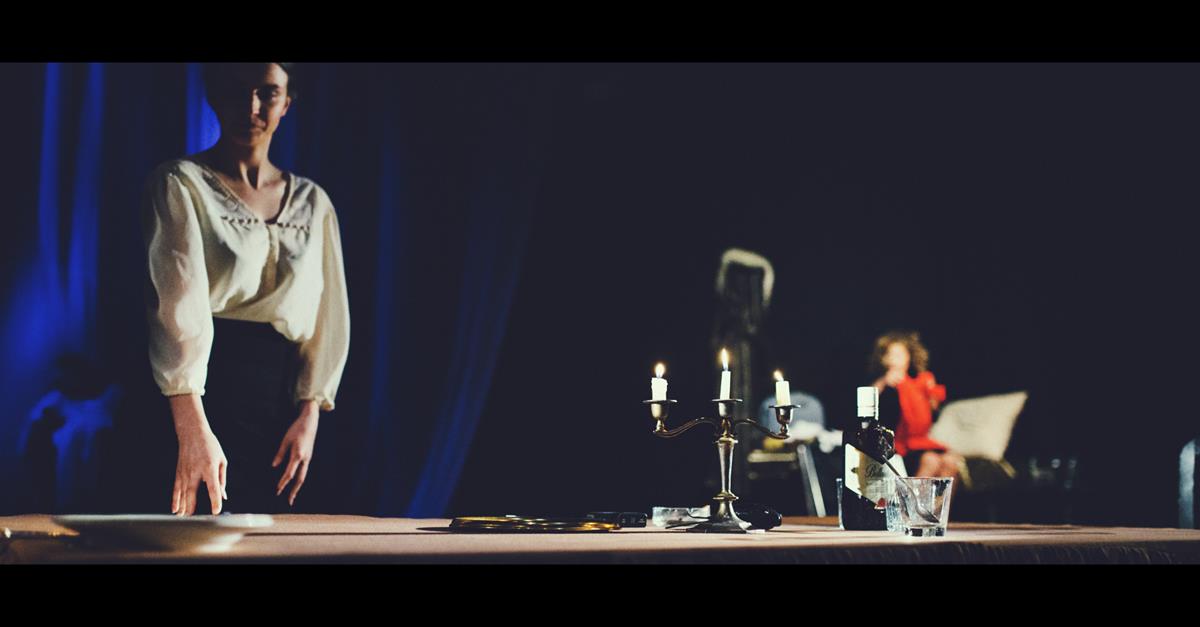
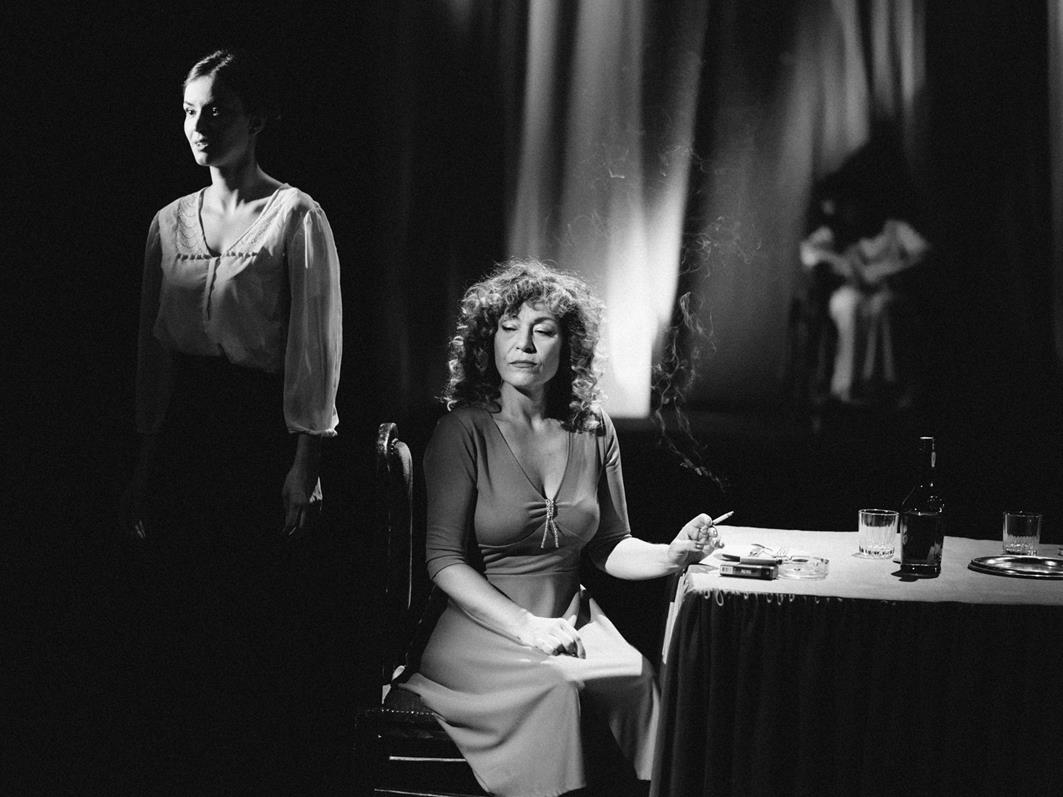
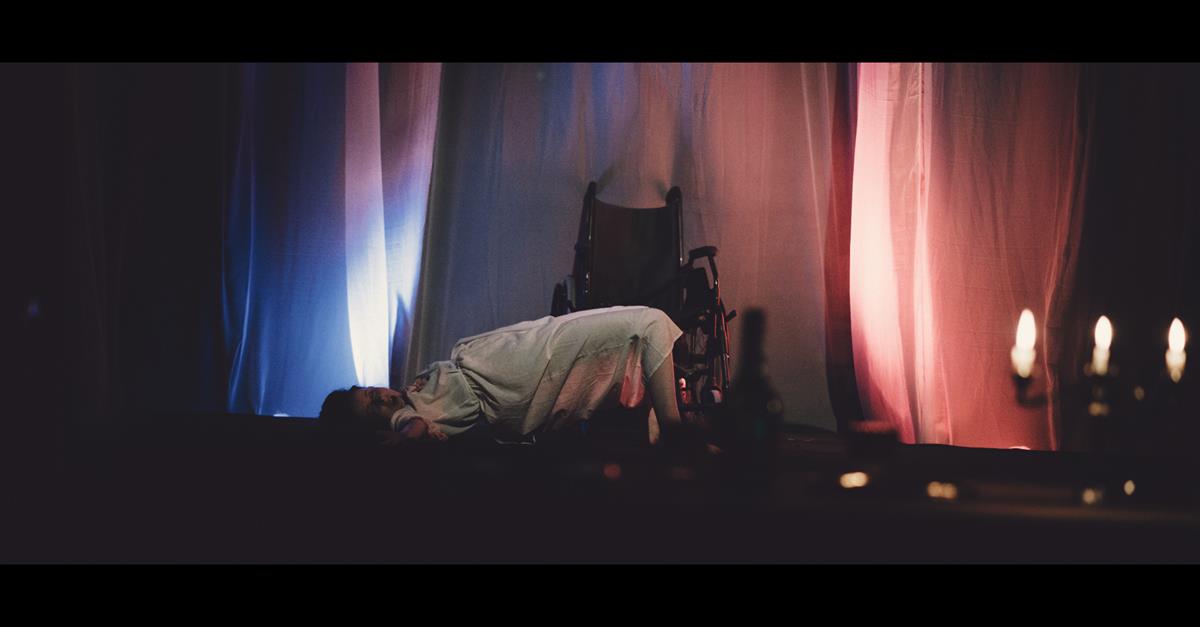
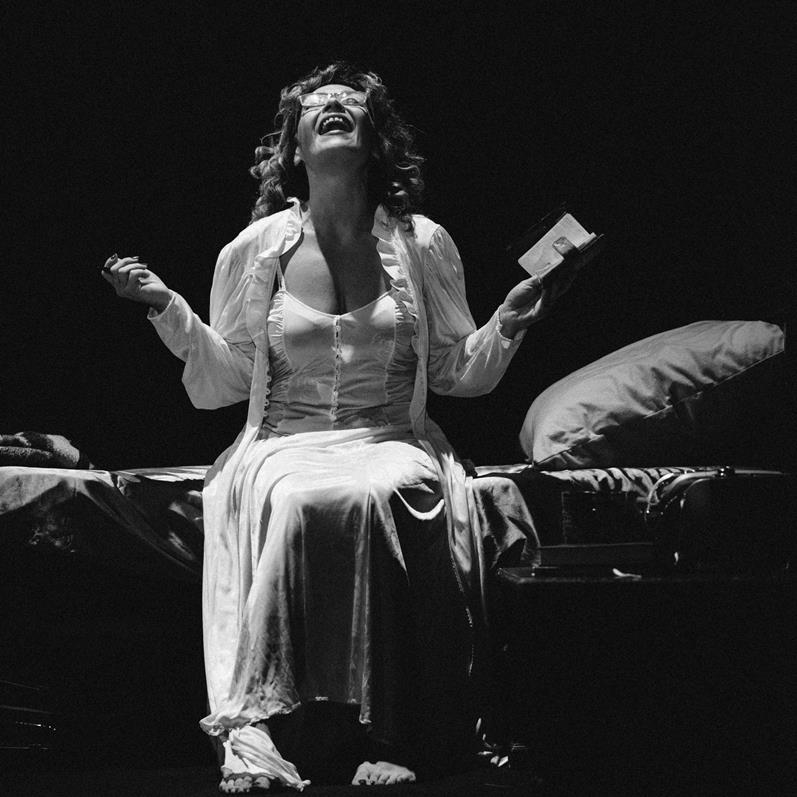
The motivation for working on the play “Autumn Sonata” arose from the need to address fundamental questions about growing up, interpersonal relationships within the family, the nature of the artist, and the art of living. At the center of the events is the relationship between a mother and daughter. What are the consequences of a lack of maternal love during childhood? To what extent can self-love go, and is it perhaps rooted in certain facts from the past, where everything goes around in circles and is passed on to the next generations? The metaphor of the play extends into the present day as well. An age of loneliness and emotional coldness. We crave depth; we have had enough of the kitsch that surrounds us. We lack the awareness, and even the need, to discover who we are and what is happening around us. This is a play for those who need theatre elevated a meter and a half above the ground.
“The human face is a great subject for film. Everything is there.” — I. Bergman.
Bergman’s view of the world is based on subjectivist expressionism. What is spoken could be seen in the actors’ eyes, their movements, their posture. Restraint in movement, intense through the rational. He penetrates the essence of the problem and is not satisfied with portraying it superficially. Bergman explored the darkest parts of the human personality. When revisiting decisions made long ago, Bergman does not ask whether they were good or bad, but whether we are capable of living with their consequences, and what consequences the choice of our own freedom and our consistency with our character leave on others, especially those closest to us.
“Autumn Sonata” is Katarina Jeličić’s master’s project in the Acting course. She is a student of the Drama Department at the Faculty of Arts in Priština, temporarily based in Kosovska Mitrovica.
ABOUT THE AUTHOR
Ingmar Bergman (14 July 1918 – 30 July 2007) was a Swedish film, theatre and television director, screenwriter and producer. He is recognized as one of the most accomplished and influential film directors of all time. He was born in Uppsala, Sweden. Bergman’s interest in theatre and film began at an early age, when he was nine years old. In 1937, he enrolled in the study of art and literature at Stockholm University. He spent most of his time in the student theatre and became a “true film addict.” Although he did not graduate, he wrote numerous plays as well as operas, and became an assistant theatre director. In 1942, he was offered the opportunity to direct one of his own plays, Caspar’s Death. The production was seen by members of the Svensk Filmindustri production company, who subsequently offered Bergman a position as a screenwriter. In 1943, he married Elsa Fischer.
Bergman’s film career began in 1941 with his revised screenplays, but his first success came in 1944, when he wrote the screenplay for Torment, a film directed by Alf Sjöberg. Over the following decade, he directed and wrote more than ten films, including Prison (1949), Sawdust and Tinsel and Summer with Monika, both released in 1953.
Bergman’s first major international success was Smiles of a Summer Night (1955), which received the Best Poetic Humor award and was nominated for the Palme d’Or the following year. This success was followed by The Seventh Seal and Wild Strawberries, both released in Sweden in 1957. From the early 1960s onward, he spent much of his life on the Swedish island of Fårö, where he filmed several of his works.
In the early 1960s, he directed three films exploring the themes of faith and doubt in God: Through a Glass Darkly (1961), Winter Light (1962) and The Silence (1963). In 1964, he made All These Women, a parody of 8½. In 1966, he directed Persona, a film he considered one of his most significant works. Although this shockingly experimental film received several awards, many consider it his masterpiece.
Following his arrest in 1976 on charges of tax evasion, Bergman stated that he would no longer make films in Sweden. He closed his film studio on the island of Fårö and went into exile. He briefly considered working in the United States, and his next film, The Serpent’s Egg (1977), was a German-American production and his second film in English (the first being The Touch in 1971). A year later, he made Autumn Sonata, starring Ingrid Bergman. His next film was From the Life of the Marionettes (1980), a British-German production. In 1982, he temporarily returned to his homeland to direct Fanny and Alexander.
Bergman assembled a personal “repertory company” of Swedish actors whom he frequently cast in his films. Norwegian actress Liv Ullmann, who appeared in nine of Bergman’s films and in one television film (Saraband), was the last to join the company, in Persona (1966), and later became Bergman’s closest collaborator, both artistically and personally. Together they had a daughter, Linn Ullmann (born in 1966).
Although Bergman is best known for his contribution to cinema, he remained active and prolific as a theatre director throughout his life. During his studies at Stockholm University, he became active in the student theatre, where he soon established a reputation for himself. After leaving university, he first worked as a trainee director at the Stockholm City Theatre. At the age of 26, he became the youngest theatre manager in Europe, at the Helsingborg City Theatre. He remained in Helsingborg for three years, after which he became a director at the Gothenburg City Theatre, where he worked from 1946 to 1949. In 1953, he became director of the Malmö City Theatre, where he remained for the next seven years.
After leaving Sweden following the tax-evasion incident, he became director of the Residenztheater in Munich (1977–1984). He remained active in theatre throughout the 1990s, and his final production was Ibsen’s The Wild Duck at the Royal Dramatic Theatre in 2002. He retired from directing at the end of 2003.
In October 2006, he was recovering from hip surgery. He died peacefully in his sleep at his home on Fårö on 30 July 2007, at the age of 89, on the same day as another renowned director, Michelangelo Antonioni. He was buried on the island on 18 August 2007 in a private ceremony.
DIRECTOR’S BIOGRAPHY
He graduated from the Secondary School of Acting in Niš in the class of Mima Vuković Kurić. He graduated with the production of A Midsummer Night’s Dream by W. Shakespeare (Oberon) at the National Theatre in Niš. From 1991 to 1993, he was a permanent member of the ensemble at the “Joakim Vujić” Theatre in Kragujevac. In 1993, he enrolled in the Acting Department at the Faculty of Arts in Priština, in the class of Professor Svetozar Rapajić. He graduated in 1997 with the production of The Lover by H. Pinter (Richard) at the “Bojan Stupica” Theatre in Belgrade.
At theatres in Kragujevac, Niš, Priština, Zaječar, Belgrade, Kruševac, Leskovac, Šabac and Kosovska Mitrovica, as well as in film, television and radio, he has performed 124 roles. He has directed 52 productions in amateur and professional theatres, based on works by B. Stanković, B. Nušić, A. Popović, Lj. Simović, J. Sterija Popović, W. Shakespeare, and others.
At the Drama Department, Acting Group, of the Faculty of Humanities in Niš, he worked as an assistant in the courses of Stage Speech and Voice Technique. Since October 2009, he has been teaching acting at the Faculty of Arts in Priština, temporarily based in Kosovska Mitrovica.
For his work as an actor and director, he has received twenty awards at theatre festivals in Serbia and abroad. He is a permanent member of the ensemble at the National Theatre in Niš.
When is this performance playing?
You can find all upcoming dates on the Repertoire page.
BASIC INFORMATION
Genre
Drama
Age
14+
Premiere
June 18, 2018
Stage
Main Stage
CREATIVE TEAM
Director
Dejan Cicmilović
Language Editor
Andrijana Videnović, M.A.
Set Design
Ivana Savić
Costume Design
Dejan Goncić
ЛИЦА
ЕВА
Катарина Јеличић
ШАРЛОТА
Сања Крстовић
ХЕЛЕНА
Леа Јевтић